Contents
What to Expect: Your Complete Window Replacement Timeline (Consult to Cleanup)
A step-by-step walkthrough of the entire window replacement process, from your first consultation call through final cleanup. Includes a detailed timeline, prep checklist, and answers to common homeowner questions.
CozyBetterHomes Team
40+ combined years in window and door replacement
How long does the window replacement process take from start to finish?
The complete window replacement process takes 6-12 weeks from first consultation to completion. A single window takes 30-60 minutes to install, and a full home replacement of 10-15 windows typically requires 1-3 days of onsite work. The longest phase is custom manufacturing at 4-8 weeks. The five phases are: consultation (1-2 hours), precision measuring (30-60 minutes), manufacturing wait (4-8 weeks), installation (1-3 days), and final walkthrough with warranty handoff (30-60 minutes).
- •Total timeline: 6-12 weeks, with 4-8 weeks being the manufacturing wait when your life is unaffected
- •Each window takes 30-60 minutes to install; a 10-15 window project takes 1-3 days
- •Spring and fall offer the best installation conditions; winter installations often come with 5-15% contractor discounts
- •No building permit needed in most Utah cities for same-size replacement; resizing requires a permit
- •Budget an extra 5-10% contingency for potential structural repairs discovered during installation
Note: Number of windows, custom vs standard configurations, season, and whether structural repairs are needed
Quick Hits
- •A single window takes 30-60 minutes to install, but the total project from first call to completion typically spans 6-12 weeks.
- •Custom window manufacturing is the longest phase, averaging 4-8 weeks depending on style and material.
- •A full home replacement of 10-15 windows usually takes 1-3 days of onsite installation work.
- •Proper preparation — moving furniture, clearing sills, trimming shrubs — makes installation day smoother and faster.
- •Always schedule a post-installation walkthrough to inspect every window and document your warranty coverage.
You have been thinking about replacing your windows for months — maybe years. The drafts got worse last winter, the energy bills crept higher again, and you finally decided it is time. But now that you are ready to move forward, a new question takes over: what actually happens next?
For most Utah homeowners, window replacement is a once-in-a-generation home improvement project. You probably have not done this before, and the process can feel unclear. How long does the whole thing take? What do you need to do to prepare? Will your house be torn apart for weeks?
Here is the reassuring truth: window replacement is one of the most predictable and manageable renovation projects you can undertake. The process follows clear phases, each with a defined timeline. When you know what to expect, there are no surprises — just a steady march from old, underperforming windows to a more comfortable, energy-efficient home.
This guide walks you through every step, from your first phone call to the moment your installer hands you the warranty paperwork and drives away.
The Five Phases of Window Replacement
Every window replacement project follows the same basic sequence, regardless of whether you are replacing three windows or thirty. The five phases are:
- Consultation and assessment — Meeting with contractors, discussing your needs, and getting a quote
- Measuring and ordering — Precision measurements and placing the manufacturing order
- Manufacturing wait — Your custom windows are built to your specifications
- Installation — The actual window swap, typically 1-3 days
- Walkthrough and cleanup — Final inspection, adjustments, and warranty handoff
The total timeline from your first call to project completion typically runs 6-12 weeks. The good news is that most of that time is the manufacturing wait — there is very little disruption to your daily life until installation day itself.
Let us walk through each phase in detail so you know exactly what to expect and how to prepare.
Phase 1: Consultation and Assessment
Timeline: 1-2 hours for the appointment, plus time to schedule
The process starts with a phone call or online form submission to schedule an in-home consultation. Most reputable Utah contractors offer free consultations. During this visit, here is what happens:
What the Contractor Does
Your consultant will walk through your home and examine every window you are considering replacing. They will look at:
- Current window condition — Frame integrity, seal condition, hardware function, and glass type
- Window count and sizes — How many windows and approximate dimensions
- Installation challenges — Accessibility, stucco or brick exterior, second-story windows, or any structural concerns
- Energy performance — Whether your current windows are single-pane, double-pane with failed seals, or outdated low-performance units
- Your home's architecture — Window styles that complement your home's design
What You Should Do
This is your chance to ask questions and share your priorities. A good consultant will ask what matters most to you — energy savings, noise reduction, curb appeal, security, or all of the above. Be honest about your budget so they can recommend the right products.
You should also be getting a read on the contractor. Are they explaining options clearly? Are they listening to your concerns? Are they pressuring you to sign today, or giving you time to decide? These first impressions matter. For more on evaluating contractors, see our guide to choosing a window installer in Utah.
What You Will Receive
After the consultation, you will receive a written quote that typically includes:
- Per-window pricing broken down by material, style, and glass package
- Labor and installation costs
- Any additional work needed (trim, framing repairs, etc.)
- Estimated timeline
- Warranty information
- Financing options if available
Most contractors provide quotes within 1-3 business days. Some provide them on the spot. Our window replacement cost guide breaks down what typical Utah pricing looks like so you can evaluate your quote with confidence.
How to Get the Most from Your Consultation
Come prepared with questions. If this is your first quote, you might not know what to ask yet — that is completely normal. Our guide to getting a window quote covers the ten questions every homeowner should ask and what the answers should sound like.
Get at least two or three quotes before making a decision. Pricing varies significantly between contractors, and comparing quotes side by side helps you understand what you are paying for.
Phase 2: Measuring and Ordering
Timeline: 30-60 minutes for measurement, plus processing time
Once you have chosen your contractor and signed the agreement, the next step is a precision measurement appointment. This is different from the initial consultation — the consultant estimated sizes, but now a trained technician takes exact measurements for manufacturing.
Why Measurements Matter So Much
Windows are manufactured to your exact opening dimensions. Unlike standard-sized furniture or appliances, replacement windows are custom-built. If the measurements are off by even a quarter inch, the window either will not fit or will have gaps that compromise insulation and weatherproofing.
A good measurement technician will:
- Measure each opening at multiple points (top, middle, bottom for width; left, center, right for height)
- Check for square — older Utah homes often have openings that have settled and are no longer perfectly rectangular
- Note any special conditions like deep window wells, unusual trim, or structural quirks
- Take photos for the manufacturing team
- Confirm your style, color, glass package, and hardware selections
What You Need to Do
Not much. Just make sure all windows that will be replaced are accessible — move any furniture that blocks the window if the technician cannot reach it easily. The appointment usually takes 30-60 minutes depending on how many windows you are replacing.
Placing the Order
After measurements are finalized, your contractor submits the order to the manufacturer. This is the point of no return — once manufacturing begins, changes are typically not possible without restarting the process (and potentially incurring additional costs).
Before the order is placed, you should receive a final confirmation document listing every window: size, style, color, glass package, hardware, and any special features. Review this carefully. Check it against your original agreement. This is your last chance to catch errors.
Phase 3: The Waiting Period — What Happens While Windows Are Built
Timeline: 4-8 weeks depending on manufacturer, style, and demand
This is the longest phase of the process, and it requires the least from you. Your custom windows are being manufactured, and there is essentially nothing to do but wait.
Why Does It Take So Long?
Custom window manufacturing is a precision process. Each window is built to your exact specifications — your dimensions, your chosen frame color, your glass package, your hardware finish. The factory cuts, assembles, fills with argon gas (for insulating units), applies Low-E coatings, and quality-checks each unit before shipping.
Standard vinyl windows with common configurations typically fall on the shorter end (4-5 weeks). Specialty items can extend the timeline:
- Custom shapes (arched, round, octagonal): Add 1-2 weeks
- Specialty colors (beyond standard white, almond, or brown): Add 1-2 weeks
- Impact-rated or triple-pane glass: Add 1-3 weeks
- Peak season orders (spring and early summer): Can add 2+ weeks due to demand
What You Can Do During the Wait
This downtime is actually useful. You can:
- Prepare your home for installation day (more on this below and in our preparation guide)
- Schedule the installation around your family's calendar — pick a week when activities are lighter
- Handle any exterior prep like trimming shrubs back from windows or scheduling a day when a neighbor can watch the kids or pets
- Research window care so you know how to maintain your new investment
Your contractor should keep you updated on manufacturing progress. Do not hesitate to call and ask for a status update if you have not heard anything after 3-4 weeks. Good communication is part of good service.
Phase 4: Installation Day
Timeline: 30-60 minutes per window; 1-3 days for a full home
This is the day you have been waiting for. Your windows have arrived, and it is time to swap the old for the new.
How the Day Typically Unfolds
Early morning arrival. Most installation crews arrive between 7:00 and 8:30 AM. They will introduce themselves, walk through the plan with you, and set up their work area. Professional crews bring drop cloths, tarps, and protective materials to shield your floors and furniture.
Setup and staging. The crew stages the new windows near their installation locations, sets up exterior ladders or scaffolding if needed, and prepares their tools. They will identify a staging area — usually your driveway or garage — for storing old windows and packaging materials.
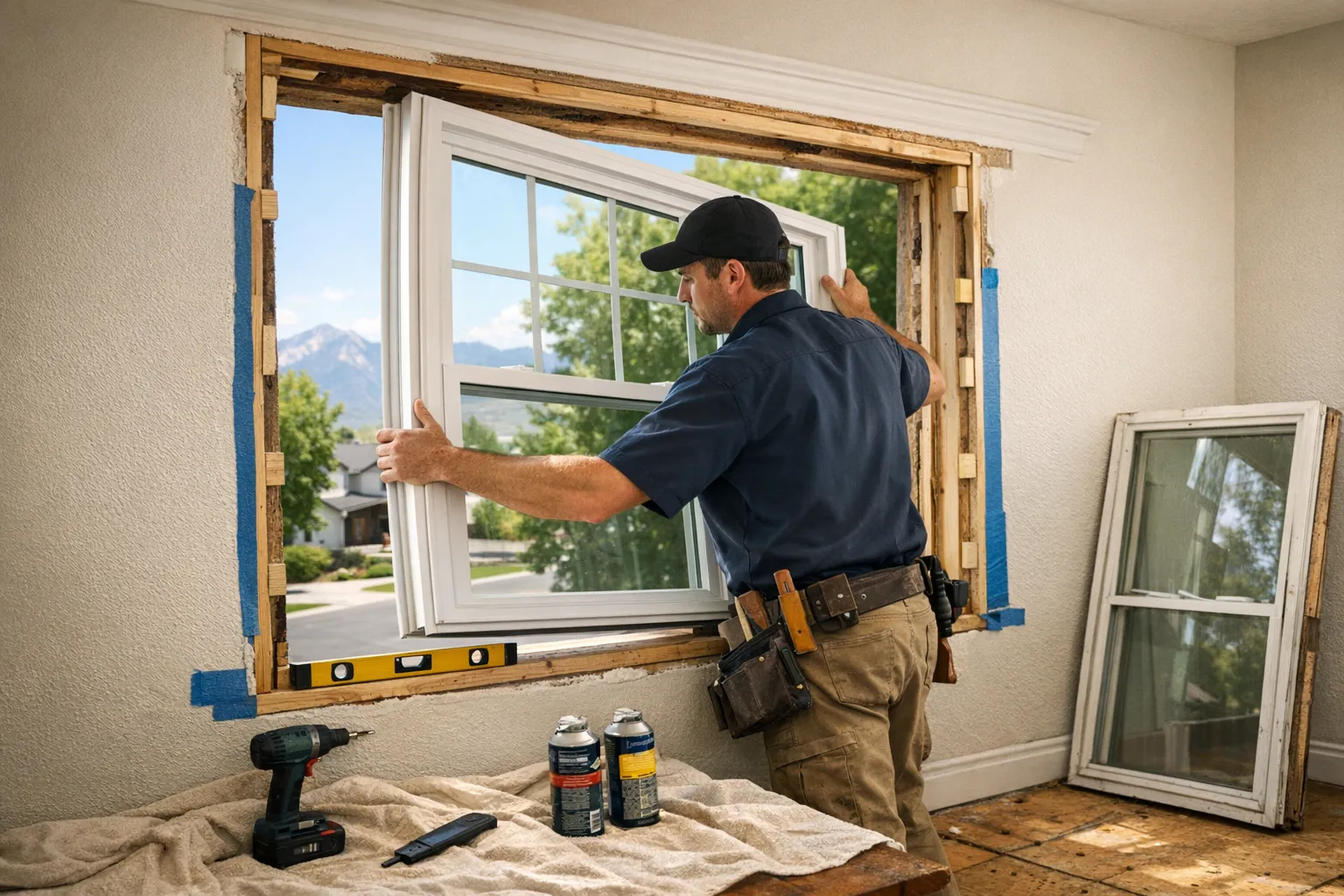
Window-by-window replacement. The crew works one window at a time. For each window, the process goes like this:
- Remove interior trim (if using a full-frame installation method)
- Remove the old window — sashes first, then the frame
- Inspect and repair the rough opening — check for rot, water damage, or structural issues
- Dry-fit the new window to confirm proper sizing
- Apply flashing and waterproofing to the rough opening
- Install the new window — shim, level, plumb, and secure
- Insulate the gaps with low-expansion foam
- Apply interior and exterior trim and sealant
- Test operation — open, close, lock, and tilt for cleaning
- Clean the area before moving to the next window
A skilled installer can complete a standard window in 30-60 minutes. Larger windows, bay windows, or units requiring structural modifications take longer — sometimes 90 minutes to 2 hours each.
What to Expect Inside Your Home
- Noise. There will be sawing, hammering, and drilling. It is not quiet work, but it is not demolition-level loud either. Think power-tool level noise, concentrated in the room being worked on.
- Brief temperature swings. Each window opening is exposed to the outside for a few minutes during the swap. In winter, that means a burst of cold air in the room. In summer, warm air. Installers work quickly to minimize this, and they do one window at a time.
- Dust and debris. Professional crews use drop cloths and clean as they go, but some dust is inevitable, especially from older plaster or stucco. If anyone in your family has severe allergies, consider staying elsewhere for the day.
- Workers moving through your home. Installers will need access to every room with a window being replaced, plus paths between rooms and exits. They will also be going in and out regularly.
The Different Installation Methods
There are two primary approaches, and your contractor will have recommended one during the consultation:
Pocket (insert) installation is the less invasive method. The new window slides into the existing frame after the old sashes and hardware are removed. This is faster, less expensive, and creates minimal disruption. It works well when the existing frame is in good condition. Most Utah replacement projects use this method.
Full-frame installation removes everything — sashes, frame, trim, and sometimes portions of interior and exterior wall covering. The new window goes into the bare rough opening. This is necessary when frames are rotted, damaged, or when you are changing window sizes. It takes longer, costs more, and creates more disruption, but it results in the best possible installation.
Multi-Day Projects
If you are replacing 10-15 windows, expect 1-3 days of installation. Crews can typically install 5-10 windows per day depending on complexity. Here is what that looks like:
- Day 1: Crew arrives, sets up, and installs the first batch of windows (usually starting with the easiest ones to build momentum)
- Day 2: Continue installing remaining windows
- Day 3 (if needed): Finish remaining windows, complete all trim, and begin cleanup
At the end of each day, every window opening will be sealed and secure. You will never be left with an open hole in your wall overnight.
Phase 5: Walkthrough, Cleanup, and Warranty Handoff
Timeline: 30-60 minutes
This phase is just as important as the installation itself — do not let the crew leave without completing it.
The Final Walkthrough
Walk through your home with the crew lead or project manager and inspect every single window that was installed. For each window, check:
- Operation: Does it open and close smoothly? Lock securely? Tilt in for cleaning?
- Appearance: Are there any scratches on the glass or frame? Is the trim fitted tightly? Is the sealant clean and consistent?
- Fit: Are there any visible gaps between the window frame and the wall? Any daylight showing around the edges?
- Hardware: Do all locks, handles, and cranks work properly?
- Screens: Are the screens included, properly fitted, and free of tears?
If anything is not right, say so immediately. It is much easier to address issues while the crew is still onsite. Any legitimate issue should be noted in writing, and the contractor should commit to a timeline for resolving it.
Cleanup Standards
A professional crew should leave your home in the same condition they found it — minus the old windows. That means:
- All old windows and packaging removed from your property
- Drop cloths and protective materials removed
- Floors swept or vacuumed in work areas
- Exterior areas raked and cleared of debris
- Any furniture they moved returned to its original position
If your contractor does not include old window haul-away, clarify that before installation day. Disposing of 10-15 old windows yourself is a significant undertaking.
Warranty Documentation
Before the crew leaves, you should receive:
- Manufacturer warranty information — covering the window product itself (glass, frame, hardware)
- Installation warranty — covering the workmanship of the installation
- Care and maintenance instructions — how to clean, lubricate, and maintain your new windows
File these documents somewhere safe. You will want them if you ever need warranty service, and they can add value when you sell your home. For a deeper dive into what warranty coverage means and what to watch for, read our window warranty guide.
Realistic Timeline: Putting It All Together
Here is a realistic timeline for a typical Utah window replacement project:
| Phase | Duration | Your Involvement |
|---|---|---|
| Research and get quotes | 1-2 weeks | High — comparing contractors and options |
| Consultation appointment | 1-2 hours | High — present for the walkthrough |
| Decide and sign agreement | 1-7 days | Moderate — reviewing quotes and contracts |
| Measurement appointment | 30-60 min | Low — just be home |
| Manufacturing | 4-8 weeks | None — windows being built |
| Preparation | 1-2 days | Moderate — furniture, curtains, clearing |
| Installation | 1-3 days | Low-moderate — be available but stay out of the way |
| Walkthrough and cleanup | 30-60 min | High — inspect everything |
Total: 6-12 weeks from first call to completion. The bulk of that time is the manufacturing wait, during which your daily life is completely unaffected.
For a more detailed breakdown of how long each phase takes and what can speed things up or slow things down, see our dedicated timeline guide.
How Weather and Season Affect Your Timeline
Utah's climate creates some unique considerations for window replacement timing.
Best Seasons for Installation
Spring (March-May) and fall (September-November) are generally the best times for window installation in Utah. Moderate temperatures mean:
- Sealants and expanding foam cure properly (extreme cold can affect curing)
- Brief exposure during window swaps is comfortable, not dangerous
- Exterior work conditions are favorable for installers
Winter Installation
Winter installation is absolutely possible and is done routinely by experienced Utah contractors. Crews work one window at a time and typically complete the swap in under 60 minutes per window, so heat loss is minimal. Some homeowners actually prefer winter installation because:
- Contractors are less busy, so scheduling is easier
- Many companies offer 5-15% winter discounts
- You get to enjoy the comfort improvement immediately when it matters most
The main drawback is that some sealants require above-freezing temperatures to cure fully. Professional installers use products formulated for cold-weather application, but it is worth asking your contractor about their cold-weather procedures.
Summer Considerations
Summer is peak season for window replacement in Utah. Demand is highest, which means:
- Longer lead times for consultations and scheduling
- Manufacturing queues may be backed up, adding 1-2 weeks to production time
- Less flexibility in choosing your preferred installation dates
If you can plan ahead and book your project for a spring installation, you often get the best combination of favorable conditions and reasonable scheduling.
Common Delays and How to Avoid Them
Most projects go smoothly, but here are the common issues that can push your timeline:
Manufacturing Delays
Specialty windows (custom shapes, unusual colors, triple-pane glass) take longer to produce. If your project includes a mix of standard and specialty units, ask your contractor whether they ship and install the standard windows first while the specialty units finish production.
Structural Surprises
When the old window comes out, installers occasionally discover hidden problems: rot in the rough opening framing, water damage behind the siding, or improperly flashed openings. These issues need to be addressed before the new window goes in. A reputable contractor will show you the problem, explain the repair needed, and provide a cost before proceeding. Budget an extra 5-10% as a contingency for potential structural repairs.
Weather Delays
Severe weather can postpone installation. Heavy rain, high winds (common in the Salt Lake Valley in spring), and extreme cold can make exterior work unsafe. Contractors will reschedule rather than compromise the quality of the installation. This is a sign of professionalism, not a problem.
HOA Approvals
If you live in a neighborhood with a homeowners association, you may need to submit an architectural change request before starting your project. Some HOAs have restrictions on window styles, colors, or grid patterns. Start this process early — HOA approvals can take 2-6 weeks depending on meeting schedules.
Your Availability
Since you need to be home for consultations, measurements, and installation, scheduling around your family's activities can sometimes add time. If you are juggling kids' sports schedules, work commitments, and the project timeline, try to book your installation during a slower week. Summer break or school holidays can actually work well since you are more likely to be home.
Your Installation Day Prep Checklist
Proper preparation makes installation day faster, smoother, and less stressful for everyone — your family, your pets, and the installation crew.
For a more detailed preparation walkthrough with room-by-room guidance, see our full preparation guide.
What Happens After Installation
Your new windows are in, the crew has left, and your home already feels different — quieter, more comfortable, and more finished-looking. Here is what to expect in the days and weeks after installation.
The First 24-48 Hours
- Sealant curing. Exterior caulk and expanding foam need time to fully cure. Avoid touching or disturbing these areas for at least 24 hours.
- Window operation. Open and close each window a few times. New windows may feel slightly stiff at first — this is normal and they will loosen up with use.
- Temperature adjustment. You may notice your HVAC system running less frequently. This is a good sign — your new windows are doing their job.
The First Month
- Inspect the sealant. After the first heavy rain, check around each window for any signs of water intrusion. Look at interior sills and walls near windows for moisture or discoloration.
- Monitor your energy bills. You probably will not see dramatic savings immediately (especially if the installation happens mid-billing cycle), but within 2-3 months, you should notice your heating or cooling costs dropping. Homeowners replacing single-pane or failed-seal windows typically see 10-25% reductions in energy costs.
- Report any issues promptly. If a window does not operate smoothly, a seal seems off, or you notice a draft, contact your contractor right away. Issues caught early are usually covered under the installation warranty and easy to fix.
Long-Term Maintenance
Modern replacement windows require remarkably little maintenance compared to older windows:
- Clean glass with standard glass cleaner and a soft cloth — no special products needed
- Lubricate tracks and hinges annually with silicone-based lubricant
- Inspect weatherstripping every 1-2 years and replace if worn
- Check and re-caulk exterior sealant every 3-5 years as part of routine home maintenance
- Never paint vinyl frames — they are designed to be maintenance-free and paint can void the warranty
Enjoying the Results
The benefits of new windows show up in ways you might not expect:
- Noise reduction is often the first thing homeowners notice. The difference between old single-pane and new dual-pane Low-E windows is dramatic, especially if you live near a busy road.
- Consistent temperatures room to room. No more cold spots near windows, no more rooms that are always too hot or too cold.
- UV protection. Modern Low-E glass blocks 95-99% of UV radiation, protecting your furniture, flooring, and artwork from fading. Learn more about how Low-E glass works.
- Curb appeal. New windows are one of the most visually impactful exterior upgrades, often returning 60-75% of their cost in home value at resale.
Choosing the Right Contractor Makes Everything Easier
The single biggest factor in how smoothly your window replacement goes is not the window product — it is the contractor who installs it. A great contractor makes the whole process feel easy. A mediocre one creates headaches at every turn.
When you are evaluating contractors, look for these qualities:
- Clear communication throughout the process — they return calls, provide updates, and set realistic expectations
- Clean, organized work sites — professional crews take pride in leaving your home better than they found it
- Proper licensing and insurance — Utah requires contractors to be licensed with the Division of Occupational and Professional Licensing (DOPL)
- Written warranties — both manufacturer and workmanship, with clear terms
- No high-pressure sales tactics — a good contractor earns your business through quality and trust, not urgency
For a detailed guide on vetting contractors — including the specific red flags that mean you should walk away — see our complete guide to choosing a window installer in Utah.
Frequently Asked Questions at a Glance
Many homeowners share the same concerns. Here are quick answers to the questions we hear most often:
Will my home be secure during installation? Yes. Installers work one window at a time and each opening is filled and secured before moving to the next. At the end of each workday, every window will be fully installed and lockable.
What about my window treatments? You will need to remove curtains, blinds, and shutters before installation day. In most cases, you can rehang them after installation, though some older mounting hardware may need new screw holes if the trim profile changed.
How do I know if I need full-frame or pocket installation? Your contractor will recommend the appropriate method during the consultation. If your frames are in good shape and you are keeping the same size windows, pocket installation is usually the better option — it is faster, less expensive, and less disruptive. If frames are damaged or you are resizing, full-frame is necessary.
Can I replace windows one at a time instead of all at once? You can, but it is usually more expensive per window. Contractors offer volume discounts, and mobilization costs (getting a crew to your home) are the same whether they install one window or fifteen. Replacing all at once also ensures consistent appearance and performance.
Your Next Steps
You now have a complete picture of the window replacement process from start to finish. Here is a suggested path forward:
- Understand costs first — Review our Utah window replacement cost guide to set a realistic budget
- Get multiple quotes — Read our guide on what to expect from a window quote so you are prepared
- Vet your contractor carefully — Use our installer vetting guide to compare your options
- Prepare your home — Follow our installation day prep guide when the date is set
- Understand your warranty — Make sure you know what your warranty covers before signing
Window replacement is a significant investment, but it is also one of the most rewarding home improvements you can make. The comfort difference is immediate, the energy savings are real, and the curb appeal boost is visible from the street. With the right contractor and realistic expectations, the process is straightforward, predictable, and — for most homeowners — far less disruptive than they feared.
Evidence & Sources
Verified 2026-02-11- Windows are rated for energy performance using U-factor, SHGC, and other metrics on the NFRC label
- National Fenestration Rating Council (2026)
- The U.S. Department of Energy provides guidelines on energy-efficient windows, doors, and skylights for homeowners
- U.S. Department of Energy (2026)
- Energy Star certified windows must meet specific performance thresholds and qualify for federal tax credits of up to $600
- Energy Star (2026)
References
- https://www.energystar.gov/products/windows_doors_skylights
- https://www.energy.gov/energysaver/windows-doors-and-skylights
- https://www.nfrc.org/energy-performance-label/
- https://modernize.com/windows/cost
- https://www.thisoldhouse.com/windows/reviews/window-replacement-cost
- https://extension.usu.edu/energy/residential
Free Utah Window Replacement Guide
Get our complete guide with local pricing data, rebate info, and a step-by-step replacement timeline — delivered to your inbox.
FAQ
How long does it take to replace one window?
A single window replacement typically takes 30-60 minutes for an experienced installer. This includes removing the old window, preparing the opening, installing the new unit, insulating, and sealing. Larger or custom-shaped windows may take 60-90 minutes.
Can I stay in my home during window replacement?
Yes. Most homeowners stay home during window installation. Each window opening is exposed for only a few minutes during the swap. In winter, expect some cool air temporarily. Installers work one window at a time so your home is never fully open to the elements.
Do I need a permit for window replacement in Utah?
In most Utah cities, you do not need a building permit for a like-for-like window replacement — meaning the same size opening with no structural modifications. If you are changing the window size, adding new openings, or doing structural work, a permit is required. Always check with your local building department.
What is the best time of year to replace windows in Utah?
Spring (March-May) and fall (September-November) offer the most comfortable installation conditions. Sealants and foam cure best in moderate temperatures. However, many Utah contractors offer winter discounts of 5-15%, and experienced crews can install year-round.
Key Takeaway
Window replacement is a 6-12 week process from first consultation to completion, with 4-8 weeks of that being manufacturing lead time. The actual installation is the fastest part — 1-3 days for most homes. Knowing what each phase involves removes the uncertainty and helps you plan around your family's schedule.