Contents
Which Windows Should You Replace First? A Room-by-Room Priority Guide
Not sure which windows to replace first on a tight budget? This room-by-room priority guide helps first-time Utah homeowners identify the highest-impact windows to upgrade first, with an interactive quiz.
CozyBetterHomes Team
40+ combined years in window and door replacement
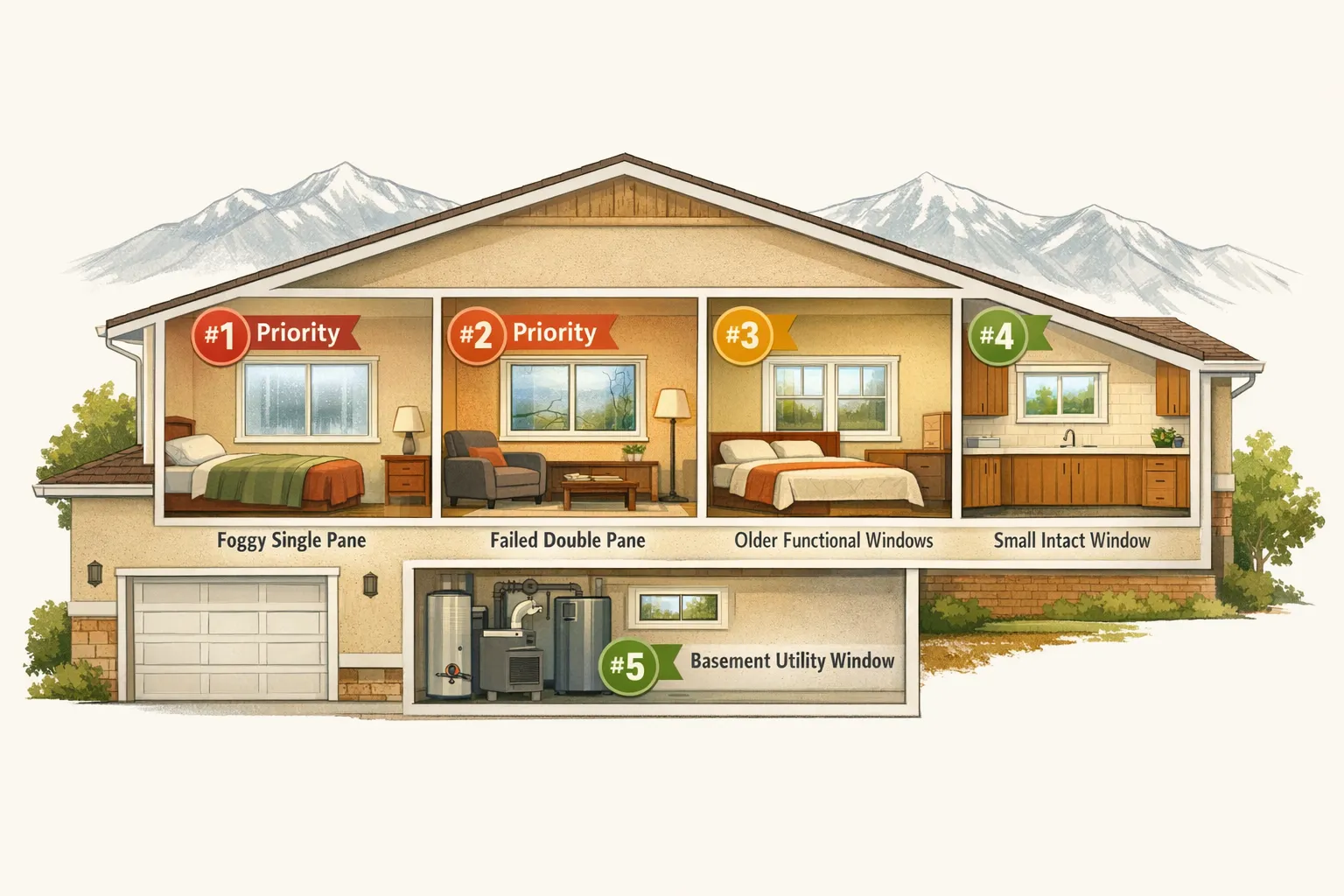
Which windows should you replace first?
Replace windows in order of condition severity: single-pane windows first (they waste 2-3x more energy), then windows with failed seals (foggy between panes), then bedroom windows for comfort, then remaining rooms. North-facing windows lose the most heat in cold climates and should be prioritized within each condition group.
- •Priority 1: Single-pane windows (immediate replacement)
- •Priority 2: Failed seals / foggy double-pane windows
- •Priority 3: Bedroom windows (comfort and sleep quality)
- •Priority 4: Kitchen and bathroom windows (moisture control)
- •Priority 5: Basement and utility areas (lowest urgency)
Quick Hits
- •Single-pane windows should always be replaced first — they lose 2-3x more energy than double-pane and often lack proper sealing
- •Foggy windows (failed seals) are your second priority — they've lost their insulating gas fill and perform like single-pane
- •Bedroom windows rank highest among room types because poor sleep quality from drafts and noise affects daily life
- •North-facing windows lose the most heat in Utah winters and should be prioritized over south-facing windows that gain passive solar heat
The Priority Framework: Energy, Comfort, Safety
When budget constraints force you to choose which windows to replace first, you need a rational framework — not guesswork. The framework that delivers the best results for first-time homeowners evaluates each window on three criteria:
Energy waste: How much money is this window costing you every month in lost heating and cooling? Single-pane windows and failed seals top this list.
Comfort impact: How much does this window affect your daily quality of life? Drafty bedrooms that disrupt sleep rank higher than drafty guest rooms you rarely use.
Safety and function: Can this window open and close properly? Does it lock securely? Egress windows in bedrooms must be operable for fire safety, making non-functional bedroom windows a code and safety concern.
Score every window in your home on these three criteria, and the replacement order becomes clear. Here is how each condition and location ranks.
Priority 1: Single-Pane Windows (Replace Immediately)
If any windows in your home have single-pane glass — one layer of glass with no air space between panes — they should be your first replacement regardless of which room they are in.
Single-pane windows are energy disasters. They conduct heat roughly 2-3 times faster than modern double-pane insulated units. In a Utah winter where outdoor temperatures regularly drop below 20 degrees F, the interior surface of single-pane glass can reach 35-40 degrees F, creating a cold radiant surface that makes the entire room feel chilly even when the furnace is running.
The energy cost is substantial. The Department of Energy estimates that upgrading from single-pane to Energy Star windows saves $101-$583 per year depending on how many windows you replace and your local climate. In Utah's cold winters and hot summers, the savings run toward the higher end of that range.
How to Identify Single-Pane Windows
Look at the window from the side at a slight angle. If you see only one reflection of your finger when you touch the glass, it is single-pane. Double-pane windows show two reflections because of the two glass layers. You can also check the glass edge at the frame — single-pane has a thin glass edge, while double-pane shows a wider assembly with a spacer bar visible between the panes.
Many Utah homes built before 1985 have single-pane windows throughout. Homes from 1985-1995 may have a mix of single-pane and early double-pane. If your home has any single-pane windows, replace them first.
For a detailed identification process, see our single-pane window identification guide.
Priority 2: Failed Seals and Foggy Glass
The second highest priority is double-pane windows where the insulated glass seal has failed. You will recognize these by the persistent haze, fog, or moisture trapped between the two panes of glass. This moisture cannot be cleaned because it is inside the sealed unit.
A failed seal means the argon or air fill between the panes has leaked out and been replaced by humid ambient air. The window now insulates at a fraction of its original capability — often approaching single-pane performance. Worse, the trapped moisture causes mineral deposits that permanently cloud the glass, reducing visibility and light transmission.
Replace or Reglaze?
For windows less than 10 years old with otherwise good frames, reglazing (replacing just the glass unit) can cost $100-$200 less than full window replacement. However, if the frames are also showing age (difficult operation, worn weatherstripping, visible deterioration), full replacement is the better investment.
For windows over 15 years old, always replace the entire unit. The frame seals and hardware are nearing end-of-life anyway, and a new window comes with a full warranty on both glass and frame.
Priority 3: Bedrooms and Living Spaces
After addressing the worst-condition windows regardless of location, shift your focus to the rooms where you spend the most time and where comfort matters most.
Bedrooms
Bedroom windows affect sleep quality — one of the most impactful aspects of daily comfort. Drafty bedroom windows cause cold spots, temperature fluctuations that trigger your furnace to cycle more frequently (creating noise), and in extreme cases, condensation and mold near the window. If you or your children are sleeping in rooms with drafty, poorly insulating windows, these should be your next priority.
North-facing bedroom windows deserve special attention. In Utah, north-facing glass receives zero direct sunlight in winter, making it the coldest window exposure in your home. These windows lose the most heat and contribute the most to bedroom discomfort during cold months.
Main Living Areas
Living room and family room windows rank just below bedrooms because you spend significant waking hours in these spaces. Large living room windows (picture windows, bay windows) deserve priority because their greater glass area means proportionally greater energy loss.
West-facing living room windows can also cause overheating in summer afternoons, forcing your air conditioning to work harder. If your living room has large west-facing windows with aging glass, replacing them reduces both winter heat loss and summer cooling costs.
Priority 4: Kitchen and Bathroom Windows
Kitchen and bathroom windows operate in high-moisture environments. If these windows have poor insulation, the cold glass surface becomes a condensation magnet — and persistent condensation leads to mold, mildew, and water damage to surrounding finishes.
Kitchen Windows
The window above the kitchen sink is one of the most-used windows in the home. It is also exposed to cooking moisture, temperature fluctuations from the stove and dishwasher, and frequent operation. If your kitchen window is difficult to open, fogs excessively, or shows frame deterioration, it should be in your next replacement phase.
Bathroom Windows
Bathroom windows endure the highest humidity levels in the home during showers and baths. Poor-insulating bathroom windows condense aggressively, potentially causing mold growth on the window sill, frame, and surrounding drywall. If you see persistent condensation, dark discoloration, or musty odors near bathroom windows, replacement is a moisture management necessity. See our guide on window condensation and mold for more on this issue.
Priority 5: Basement and Utility Areas
Basement windows, laundry room windows, and windows in utility or storage areas are the lowest replacement priority for comfort purposes. You spend less time in these spaces, and the comfort impact is minimal.
However, there are two exceptions that can elevate basement window priority:
Egress compliance: Utah building code requires at least one operable egress window in every bedroom — including finished basement bedrooms. If your basement bedroom has a window that does not meet current egress requirements (minimum 5.7 square feet of opening, minimum 24 inches high, minimum 20 inches wide, sill height maximum 44 inches from floor), replacing it becomes a safety and code priority. See our egress window requirements guide.
Moisture intrusion: Basement windows at or below grade are vulnerable to water intrusion. If your basement windows show water staining, frame rot, or evidence of leakage, replacement with properly sealed and flashed window wells is an important waterproofing measure.
Your Personalized Replacement Priority Quiz
Use this quiz to create a personalized priority plan for your home. Answer based on the specific conditions you have observed in your windows.
How to Use Your Results
Whatever priority level the quiz suggests, follow this action plan:
- Walk your home with a notepad and rate each window on a 1-5 scale for condition (1 = good, 5 = failing) and comfort impact (1 = fine, 5 = miserable)
- Create a ranked list combining condition and comfort scores
- Get quotes for the top-ranked windows first — even if that is only 2-3 windows
- Keep the master list and update it as you complete each phase
For a comprehensive overview of the entire first-time buyer window replacement process, return to our first-time homeowner's window guide which covers budgeting, material selection, installer vetting, and financing.
Special Considerations for Utah Fixer-Uppers
If you bought a fixer-upper in Utah — especially pre-2000 construction in older neighborhoods of Salt Lake City, Ogden, or Provo — you may be dealing with a mix of original single-pane windows, mismatched replacement windows from previous owners, and windows that were "fixed" with caulk and plastic film rather than properly replaced.
In these situations, a whole-home approach often makes more financial sense than piecemeal replacement because:
- The volume discount on 12-15+ windows is significant (10-20%)
- Matching all windows at once ensures visual consistency for curb appeal
- Many fixer-upper windows are so far past their useful life that repair is not economical
- The energy savings from replacing the entire house at once are substantial enough to partially offset monthly financing payments
Talk to your installer about phased whole-home pricing — many Utah contractors will lock in a volume discount for a complete project even if you split the installation into two visits 3-6 months apart. This gives you the best of both worlds: volume pricing and manageable cash flow.
Evidence & Sources
Verified 2026-02-11- Single-pane windows lose 2-3x more energy than insulated double-pane units
- U.S. Department of Energy (2025)
- Energy Star windows save $101-$583 annually on heating and cooling
- Energy Star (2026)
References
- https://www.energy.gov/energysaver/update-or-replace-windows
- https://www.energystar.gov/products/windows
- https://www.nfrc.org/energy-performance-label/
- https://extension.usu.edu/energy/
- https://codes.iccsafe.org/codes/utah
Free Utah Window Replacement Guide
Get our complete guide with local pricing data, rebate info, and a step-by-step replacement timeline — delivered to your inbox.
FAQ
Should I replace the biggest windows first?
Not necessarily. Size matters, but condition matters more. A small single-pane bathroom window wastes more energy per square foot than a large double-pane living room window with intact seals. Replace by condition severity first, then by size within each condition category.
Do I need to replace all windows on one wall at the same time?
No. Unlike exterior paint or siding, windows are discrete units. You can replace individual windows without affecting adjacent ones. However, replacing all windows on one elevation at once does ensure color and style consistency, which matters if you are switching frame colors.
How many windows should I replace per year on a budget?
Most first-time homeowners on a budget can manage 3-5 windows per year at $1,200-$3,250 total. At this pace, a 12-15 window home takes 3-4 years to complete. Prioritize the worst performers each year using the framework in this guide.
Key Takeaway
Replace windows in order of condition severity, not room importance: single-pane first, failed seals second, then comfort rooms like bedrooms and living areas. This approach maximizes energy savings and comfort improvement per dollar spent.