Contents
How to Maintain Vinyl Windows: Seasonal Care Guide for Utah
Vinyl windows are low-maintenance but not zero-maintenance. A practical seasonal care guide to keep your Utah windows performing, sealing, and looking great for 20-25 years.
CozyBetterHomes Team
40+ combined years in window and door replacement
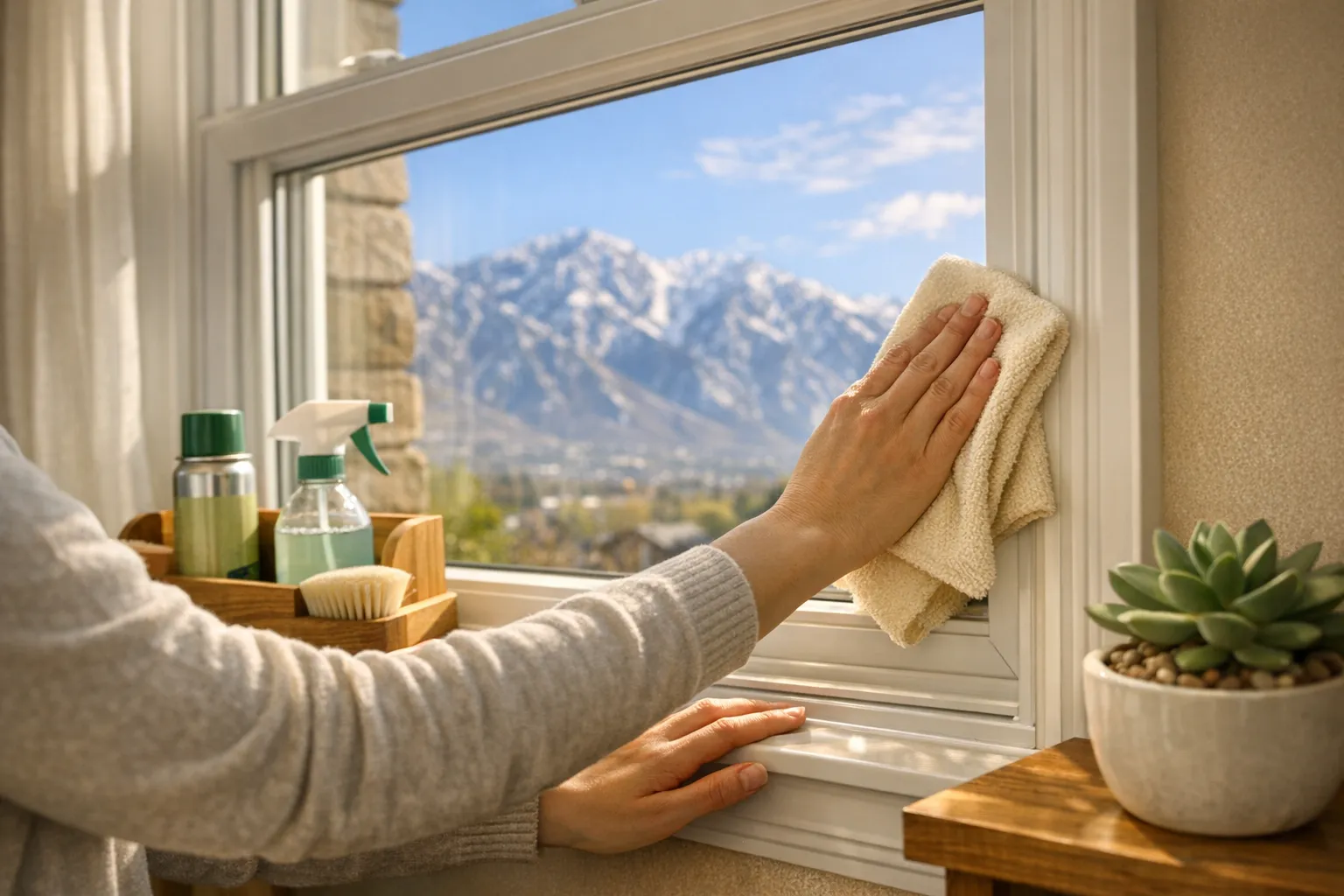
How do you maintain vinyl windows and how long do they last?
Vinyl windows last 20-25 years with basic seasonal maintenance that takes about 15-20 minutes per window per year. The key tasks are cleaning tracks and weep holes in spring and fall, lubricating hardware with silicone spray annually, inspecting weatherstripping for cracks or compression, and checking exterior caulk for freeze-thaw damage. In Utah's high-UV, low-humidity climate, weatherstripping typically needs replacement every 8-12 years. Never use WD-40, abrasive cleaners, power washers, or dark paint on vinyl frames, as these cause damage and accelerate degradation.
- •Clean tracks and clear weep holes twice per year to prevent binding sashes and water damage
- •Use only silicone spray lubricant on tracks, hinges, and locks — never WD-40 or petroleum-based oils
- •Replace weatherstripping every 8-12 years (sooner on south- and west-facing windows due to UV exposure)
- •Between-pane condensation, frame cracks, and recurring drafts despite new weatherstripping mean replacement is needed
Note: Window age, quality tier, UV exposure, and whether the home is in a high-elevation or extreme-climate area
Quick Hits
- •Vinyl windows need about 15-20 minutes of maintenance per window per year — far less than wood, but not zero.
- •Never use abrasive cleaners, solvents, or power washers on vinyl frames — they damage the surface and accelerate UV degradation.
- •Lubricating tracks, hinges, and locks annually with silicone spray prevents the binding and hardware failure that leads to seal gaps and drafts.
- •Utah's intense UV degrades weatherstripping faster than in lower-elevation climates — inspect and replace every 8-12 years.
- •Cleaning weep holes (the small drainage slots at the bottom of the frame) prevents water backup that can damage seals and interior sills.
The sales pitch for vinyl windows always includes the phrase "virtually maintenance-free." And compared to wood windows that need scraping, sanding, and repainting every few years, that is true. Vinyl does not rot, does not need painting, and does not swell or shrink with humidity changes.
But "low maintenance" is not "no maintenance." Vinyl windows still have moving parts, seals, and tracks that need attention — especially in Utah, where UV intensity, extreme temperature swings, and dry air put more stress on window components than in gentler climates.
This guide covers what to do each season to keep your vinyl windows performing well for their full 20-25 year lifespan. If your windows are already showing signs of failure despite maintenance, our guide to stopping window drafts covers the full range of solutions from quick fixes to replacement.
Why Vinyl Windows Still Need Maintenance
Three things can go wrong with neglected vinyl windows:
Dirty tracks cause binding. When dirt, dust, and debris accumulate in the tracks, the sash cannot close completely. A sash that does not fully seat against the weatherstripping creates air gaps. Over time, forcing a sash through a dirty track also wears down the weatherstripping prematurely.
Dry hardware causes failure. Locks, hinges, tilt latches, and balance mechanisms are metal components that need occasional lubrication. Without it, they stiffen, bind, and eventually break. A broken lock means the sash does not pull tight against the frame. A failed balance means the window will not stay open — or will not close fully.
Clogged weep holes cause water damage. Those small slots or holes at the bottom of the exterior frame are weep holes — they drain water that collects inside the track during rain. When they clog with dirt, water backs up, sits against the seal, and can eventually seep into the wall cavity or damage the interior sill.
All three issues are preventable with minimal effort.
Spring Maintenance (March-April)
Spring is your primary maintenance window. Winter weather has done its work on your windows, and you need to assess and address any damage before summer UV exposure compounds the issues.
Clean Frames and Glass
Wash vinyl frames with a soft cloth, warm water, and mild dish soap. Do not use abrasive cleaners, scouring pads, or anything containing solvents, acetone, or bleach — these damage the vinyl surface and strip any UV-protective coatings.
For the glass, any standard glass cleaner works. Spray onto a cloth first (not directly onto the glass near the frame) to avoid letting cleaner seep into the seal between glass and frame.
Clean Tracks and Weep Holes
Vacuum window tracks with a crevice attachment to remove accumulated dirt and debris. Wipe clean with a damp cloth. Use a small wire or toothpick to clear each weep hole — push from inside out so debris exits to the exterior.
This is the single most important maintenance task. Clean tracks and clear weep holes prevent the two most common vinyl window problems: binding sashes and water damage.
Lubricate Moving Parts
Apply a light coat of silicone spray lubricant to:
- Window tracks — the channels where the sash slides up and down (double-hung) or side to side (slider)
- Hinges and pivot points — on casement, awning, and tilt-in windows
- Lock mechanisms — the cam locks and keeper hardware
- Balance mechanisms — the springs or coils that hold the sash at the desired position
Critical: Use only silicone-based lubricant. Never use WD-40, petroleum-based oils, or cooking spray. WD-40 is a solvent that evaporates quickly and leaves a residue that attracts dust, creating worse buildup than no lubrication at all. Silicone spray stays slick, does not attract debris, and performs from -40°F to 400°F.
Inspect Weatherstripping
Open each window and visually examine the weatherstripping. Press it with your finger — it should compress and spring back. If it stays compressed, has hardened, or has cracked, it needs replacement.
In Utah, expect to replace weatherstripping every 8-12 years on quality vinyl windows. South-facing and west-facing windows may need replacement sooner due to UV exposure. Budget-grade windows with thinner weatherstripping may need it at 5-7 years.
Our guide to DIY window fixes that actually work covers weatherstripping selection and installation in detail.
Inspect Exterior Caulk
Walk the outside of your house and check the caulk line between each window frame and the surrounding siding or stucco. Utah's freeze-thaw cycle is brutal on exterior caulk. Look for cracks, separation, and gaps. Touch up any failed sections with outdoor-rated silicone caulk while spring temperatures are warm enough for proper curing.
Summer Maintenance (June-July)
Summer maintenance is lighter — mostly about UV protection and monitoring.
Check for UV Damage
Examine south-facing and west-facing window frames for signs of UV degradation:
- Chalking: A white, powdery film on the surface when you rub it. This is the vinyl surface breaking down. Mild chalking is cosmetic; heavy chalking indicates the UV stabilizers are depleted.
- Yellowing or discoloration: Gradual color change, especially noticeable on white vinyl.
- Brittleness: If the vinyl feels stiff and hard rather than slightly flexible when you press on it, UV damage is advancing.
For windows showing early UV damage, applying a vinyl protectant (303 Aerospace Protectant is the standard recommendation) can slow further degradation and restore some flexibility to the surface.
Operate All Windows
Open and close every window at least once during summer. This serves two purposes: it confirms that all hardware and balances are functioning, and it prevents tracks from developing a "memory" indent where the sash rests in the closed position year-round.
Fall Maintenance (September-October)
Fall prep is covered in detail in our Utah winter window prep checklist, but the vinyl-specific items are:
Clean Tracks Again
A second track cleaning in fall removes the summer's accumulation of dust, pollen, and insect debris before you seal the windows for winter. This ensures the sash seats fully against the weatherstripping when you close up the house.
Test All Locks
Every lock should engage smoothly and pull the sash firmly into the frame. A lock that does not fully engage leaves a gap in the seal. If any lock is stiff, apply silicone spray to the mechanism. If it is broken, replacement hardware is $10-25 per window and is straightforward to install.
Check Drainage
Run a small amount of water into each window track from the interior side and watch that it drains out through the weep holes. If water pools instead of draining, clear the weep holes again. Standing water in the track during winter will freeze, expand, and can damage the seal or track.
Winter Maintenance (December-February)
Winter maintenance is mostly hands-off. Your fall prep should have your windows sealed and ready. The few winter-specific tasks:
Monitor for Condensation
Some interior condensation on cold mornings is normal. Excessive or daily condensation indicates either too-high indoor humidity or a window that is not performing well. If you see condensation between the panes (not on the interior surface), the insulated glass seal has failed — maintenance cannot fix this. See our condensation and mold guide for diagnosis and solutions.
Leave Windows Closed and Locked
This seems obvious, but it matters: locked windows seal tighter than unlocked ones because the lock mechanism pulls the sash into the weatherstripping. During Utah's winter, keep all windows locked to maximize the seal.
Do Not Scrape Ice Off Interior Glass
If ice forms on the interior surface of a window (a sign of severe cold or very poor insulation), let it melt naturally. Scraping can damage the glass coating and the seal between glass and frame.
Common Vinyl Window Problems and Fixes
| Problem | Cause | Fix | Cost |
|---|---|---|---|
| Window sticks or binds | Dirty tracks | Clean and lubricate | $0-5 |
| Sash will not stay open | Broken balance | Replace balance mechanism | $15-40 |
| Lock does not engage | Misalignment or broken hardware | Adjust or replace lock | $10-25 |
| Drafts at edges | Worn weatherstripping | Replace weatherstripping | $5-12/window |
| Water on interior sill | Clogged weep holes | Clear with wire or toothpick | $0 |
| Foggy between panes | Failed insulated glass seal | Replace glass unit or window | $200-800 |
| Frame yellowing | UV degradation | Apply vinyl protectant | $10-15 |
| Crack in frame | Impact damage or severe UV | Window replacement needed | $300-650 |
What NOT to Do
These common mistakes damage vinyl windows and shorten their lifespan:
Never use a power washer on vinyl window frames. The high-pressure stream can force water behind the seal, into the frame cavities, and behind your siding. It can also dislodge weatherstripping and damage the vinyl surface.
Never use abrasive cleaners or scouring pads. They scratch the vinyl surface, removing the smooth UV-protective layer and creating micro-grooves that trap dirt.
Never paint vinyl windows with dark colors. Dark paint absorbs more solar heat, which can warp the vinyl frame. This is especially problematic in Utah, where south-facing surfaces can reach 150°F+ in summer sun.
Never use WD-40 as a lubricant. It evaporates quickly and leaves a sticky residue that attracts dust and grime, making track buildup worse over time.
Never seal weep holes shut. They exist for drainage. Sealing them traps water inside the frame, leading to mold, rot in surrounding materials, and potential seal failure.
When Maintenance Is Not Enough
Regular maintenance extends the life of your vinyl windows, but every window eventually reaches the end of its service life. Signs that maintenance cannot solve:
- Between-pane fog that will not clear — seal failure is permanent
- Frame cracks or warping — structural damage that compromises the seal
- Hardware that keeps failing despite replacement — the frame is out of square
- Drafts that return within one season despite fresh weatherstripping — the window assembly has degraded
If you are seeing these signs of window failure on multiple windows, it is time to start planning for replacement. Our guide to window replacement timing in Utah helps you choose the right season to schedule the project, and the complete draft elimination guide walks through the full spectrum of options from targeted repair to full replacement.
The good news: if you have maintained your vinyl windows well, they have given you 20-25 years of service for a fraction of the maintenance effort that wood or aluminum windows demand. And your next set of vinyl windows, built with improved UV stabilizers and multi-chamber frame designs, will likely last even longer — especially if you keep up the 15-20 minutes per window per year that keeps them in top condition.
Evidence & Sources
Verified 2026-02-11- Quality vinyl windows last 20-25 years with basic maintenance, while budget-grade vinyl may show problems at 15-18 years
- U.S. Department of Energy (2026)
- UV radiation at Utah's 4,200-5,000 feet elevation is 15-20% stronger than at sea level, accelerating weatherstripping and seal degradation
- Utah State University Extension (2026)
- WD-40 is a solvent that evaporates quickly and leaves a residue that attracts dust, making track buildup worse over time
- Consumer Reports (2026)
- Vinyl frames can reach 150°F+ on south-facing surfaces in Utah summer sun, which is why dark paint causes warping
- Vinyl Siding Institute (2026)
References
- https://www.energy.gov/energysaver/windows-doors-and-skylights
- https://www.vinyl-siding.org/maintenance/
- https://extension.usu.edu/energy/residential
- https://www.consumerreports.org/windows/how-to-clean-windows/
Free Utah Window Replacement Guide
Get our complete guide with local pricing data, rebate info, and a step-by-step replacement timeline — delivered to your inbox.
FAQ
How long do vinyl windows last?
Quality vinyl windows last 20-25 years with basic maintenance. Budget-grade vinyl may show problems at 15-18 years. In Utah, factors that shorten lifespan include intense UV exposure (especially south and west faces), extreme temperature swings, and low humidity that dries out seals and weatherstripping. Proper maintenance — cleaning, lubricating, and inspecting seals — helps vinyl windows reach the upper end of their lifespan.
Can you paint vinyl windows?
It is possible but generally not recommended. Painting vinyl with a dark color can cause the frame to absorb more heat, which may warp the vinyl. If you do paint, use only paint specifically formulated for vinyl (such as vinyl-safe acrylic latex) in a color no darker than the original. Most manufacturers will void the warranty if the windows are painted improperly.
How do you clean vinyl window frames that have turned yellow?
A paste of baking soda and water applied with a soft cloth can lighten mild yellowing. For more stubborn discoloration, vinyl window cleaner products (like Vinyl Renu or 303 Aerospace Protectant) restore the color and add UV protection. Avoid bleach, which can damage the vinyl surface over time.
What is the best lubricant for vinyl window tracks?
Silicone spray lubricant is the best choice. It does not attract dust or grime, works in extreme temperatures, and is safe for vinyl, rubber, and metal components. Apply a light coat to tracks, hinges, and lock mechanisms once per year. Never use WD-40 — it is a solvent, not a lubricant, and it attracts dust that gums up the track.
Key Takeaway
Vinyl windows are marketed as maintenance-free, but in Utah's demanding climate, 15-20 minutes of seasonal care per window keeps them performing for their full 20-25 year lifespan. Neglect the basics — cleaning, lubricating, and inspecting seals — and you will be replacing them years ahead of schedule.